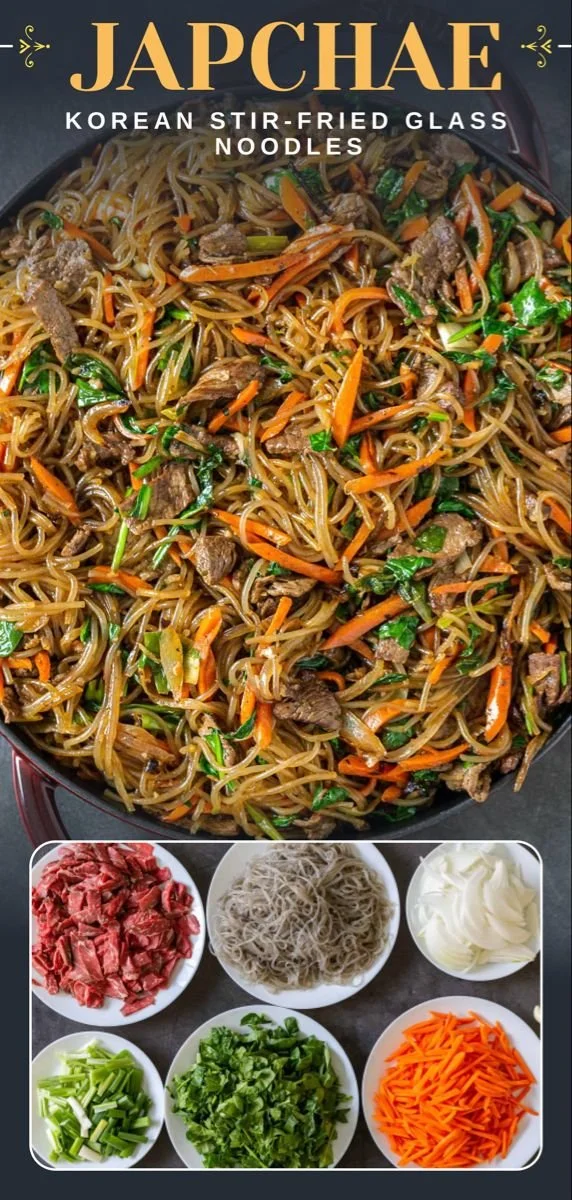
The savory blend of flavors in this Japchae (Korean Stir-Fried Glass Noodles) recipe makes it a must-try dish for any home cook. With tender glass noodles, hearty vegetables, and savory beef, this recipe embodies comfort and satisfaction. It’s not only delicious but also quick to prepare, making it the perfect option for weeknight dinners or meal prep.
Why You’ll Love Japchae (Korean Stir-Fried Glass Noodles)
- Quick to Prepare: This dish comes together in about 30 minutes, making it an excellent choice for busy evenings.
- Versatile Ingredients: You can easily swap out the vegetables or protein based on what you have on hand, allowing for creativity and personalization.
- Great for Meal Prep: Japchae keeps well in the fridge, making it an ideal candidate for leftovers or meal prepping for the week.
- Family-Friendly: With its appealing flavors and textures, it’s a dish that both kids and adults will enjoy.
- Flavorful Yet Simple: The combination of soy sauce, sesame oil, and garlic provides a deliciously rich flavor without complex techniques.
Recipe Overview
- Prep Time: 10 minutes
- Cook Time: 15 minutes
- Total Time: 25 minutes
- Servings: 4 servings
- Difficulty Level: Easy
Ingredients You’ll Need for Japchae (Korean Stir-Fried Glass Noodles)
-
Noodles and Seasonings:
- 8 oz sweet potato glass noodles
- 3 tbsp soy sauce
- 1 tbsp sesame oil
- 1 tbsp sugar
- Sesame seeds for garnish
-
Proteins and Vegetables:
- 1/2 lb beef, thinly sliced
- 1 tbsp vegetable oil
- 1 onion, sliced
- 1 carrot, julienned
- 1 bell pepper, sliced
- 2 cups spinach
- 3 cloves garlic, minced
Notes:
- Sweet Potato Glass Noodles: These noodles have a unique chewy texture that enhances the overall dish. Look for them in Asian grocery stores.
- Beef Substitutions: Chicken, tofu, or even tempeh can be excellent substitutes for beef if you prefer a different protein.
- Vegetable Options: Feel free to add mushrooms, broccoli, or bok choy for a colorful variety.

How to Make Japchae (Korean Stir-Fried Glass Noodles)
-
Cook the Noodles
Boil the sweet potato glass noodles according to package instructions. Once tender, drain and set aside. -
Brown the Beef
In a large pan or wok, heat the vegetable oil over medium heat. Add the thinly sliced beef and cook for about 3-4 minutes, or until browned. -
Sauté the Vegetables
Add the sliced onion, julienned carrot, and sliced bell pepper to the pan. Stir-fry for 3-4 minutes until the vegetables are tender but still crisp. -
Add Garlic
Toss in the minced garlic and sauté for another minute, until fragrant. -
Combine Everything
Add the cooked noodles, spinach, soy sauce, sesame oil, and sugar to the pan. Mix well and cook for 2-3 minutes, stirring gently until heated through. -
Serve and Garnish
Transfer to a serving dish, sprinkle with sesame seeds, and serve warm.
Tips for Success
- Don’t Overcook the Noodles: Follow the package instructions closely to avoid mushy noodles. They should be al dente.
- High Heat for Stir-Frying: Use a high heat when stir-frying for a quicker cooking time and to achieve a better sear on the vegetables and beef.
- Prep Ingredients Ahead: Have all vegetables washed, sliced, and ready to go for a smooth cooking experience.
- Taste and Adjust Seasoning: Feel free to adjust soy sauce or sugar to fit your flavor preference.
Easy Variations
- Vegetarian Version: Substitute beef for tofu and add extra vegetables like zucchini or mushrooms for a satisfying meatless dish.
- Spicy Kick: Add a tablespoon of gochujang (Korean chili paste) during step 5 for a spicy twist.
- Nutritional Boost: Incorporate other greens like kale or Swiss chard for added nutrients and flavor.
- Noodle Variations: Try using regular wheat noodles or rice vermicelli for a different texture.
What to Serve with Japchae (Korean Stir-Fried Glass Noodles)
- Korean BBQ: The rich, grilled flavors of Korean BBQ meats pair beautifully with the sweetness of japchae.
- Kimchi: This fermented side dish adds a tangy contrast to the smooth noodles and enhances the meal’s overall flavor profile.
- Cucumber Salad: A light, refreshing cucumber salad balances the heartiness of the stir-fry with its crispness.
- Rice: Serve with a side of steamed rice to soak up the delicious sauce.
Storage and Reheating
- Refrigerator Storage: Store any leftovers in an airtight container in the fridge for up to 3 days.
- Freezer Storage: Japchae can also be frozen, but note the noodles may become slightly softer upon thawing. Store in a freezer-safe container for up to 1 month.
- Best Reheating Method: Reheat in a skillet on low heat, adding a splash of water or oil to keep the noodles from drying out.
- Meal Prep Note: If preparing several portions for the week, keep sauce separate until ready to serve for optimal texture.
Common Mistakes to Avoid
- Using Too Much Oil: Just a tablespoon is enough. Too much oil can make the dish greasy.
- Overcrowding the Pan: Cook in batches if necessary; overcrowding can lead to steaming instead of frying.
- Ignoring the Noodles: Make sure you drain the noodles well to prevent excess water from watering down the dish.
Japchae (Korean Stir-Fried Glass Noodles): Background & Cultural Inspiration
Japchae has a rich history in Korean cuisine, often enjoyed during celebrations, birthdays, and holidays. Its roots can be traced back to the 17th century when it was first served at royal banquets. Traditionally, it represents prosperity and health, with its colorful assortment of vegetables symbolizing a flourishing year ahead. Today, japchae is a beloved dish served in homes across Korea, often remixed to suit individual tastes. Its delightful blend of textures and flavors has made it an internationally appreciated meal.
Frequently Asked Questions
Can I make Japchae ahead of time?
Yes, Japchae can be prepared in advance and stored in the fridge for up to 3 days. Reheat gently before serving.
What can I substitute for beef in Japchae?
You can use thinly sliced chicken, pork, shrimp, or tofu for a vegetarian version.
How spicy is Japchae?
Japchae is generally not spicy. If you enjoy heat, consider adding gochujang or red pepper flakes for a kick.
Can I add different vegetables?
Absolutely! You can customize the vegetables based on your preferences or what you have on hand. Popular additions include mushrooms, zucchini, and water chestnuts.
How do I prevent the noodles from sticking together?
Make sure to rinse the cooked noodles under cold water and coat them lightly with oil before adding them to the stir-fry.
Final Thoughts
Japchae (Korean Stir-Fried Glass Noodles) is a delightful dish that brings warmth and flavor to any table. With its vibrant mix of ingredients and satisfying textures, it’s perfect for both family meals and entertaining guests. Easy to prepare and highly adaptable, this recipe deserves a spot in your regular cooking rotation. So gather your ingredients and give this beloved Korean dish a try—you won’t be disappointed!